
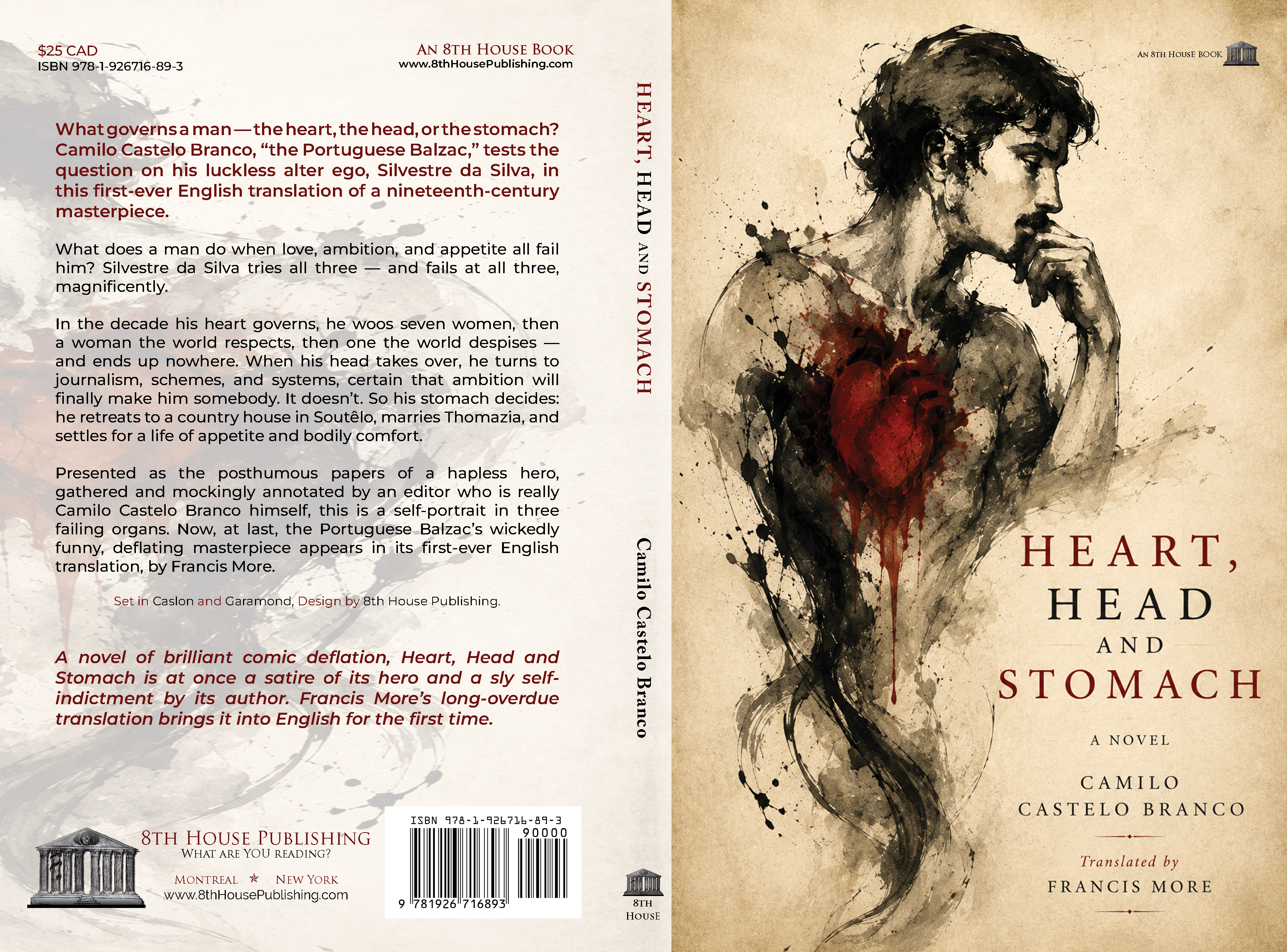
MONTREAL, QC — 8th House Publishing announces the publication of Heart, Head and Stomach (Coração, Cabeça e Estômago), the 1862 classic by Camilo Castelo Branco, in its first-ever English translation. Translated by Francis More, the paperback will be released December 1, 2026.
For more than a century and a half, this sharpest of Portuguese satires has never before appeared in English. Presented as the posthumous papers of the hapless Silvestre da Silva, the novel traces a life governed in turn by three organs. In the decade his heart rules, Silvestre woos the Seven Women, then the Woman the World Respects, then the Woman the World Despises — and ends up nowhere. When his head takes over, he throws himself into journalism, ambition, systems, and schemes, certain that success will finally make him somebody. It doesn't. So his stomach decides: he retreats to a country house in Soutêlo, marries Thomazia, and settles into a life of appetite and bodily comfort.
The papers are gathered and mockingly annotated by a fictional "editor" who is really Camilo Castelo Branco himself — a frame that lets the author skewer his own narrator and, with him, romantic delusion, social ambition, and bourgeois hypocrisy. The result is a self-portrait in three failing organs: wickedly funny, deflating, and strikingly modern in its satire.
About the Book
Heart, Head and Stomach is the first-ever English translation of Camilo Castelo Branco's 1862 classic. A framed narrative of posthumous papers, it follows Silvestre da Silva through three phases of misadventure — the heart (absurd love affairs), the head (journalism, ambition, schemes), and the stomach (retreat, appetite, comfort) — under the mocking editorship of the author himself.
About the Author
Camilo Castelo Branco (1825–1890), known as "the Portuguese Balzac," was one of Portugal's most prolific and celebrated nineteenth-century writers.
Availability
Heart, Head and Stomach — paperback, 214 pages, $25.00 CAD, ISBN 978-1-926716-89-3 — is published by 8th House Publishing and will be available December 1, 2026.

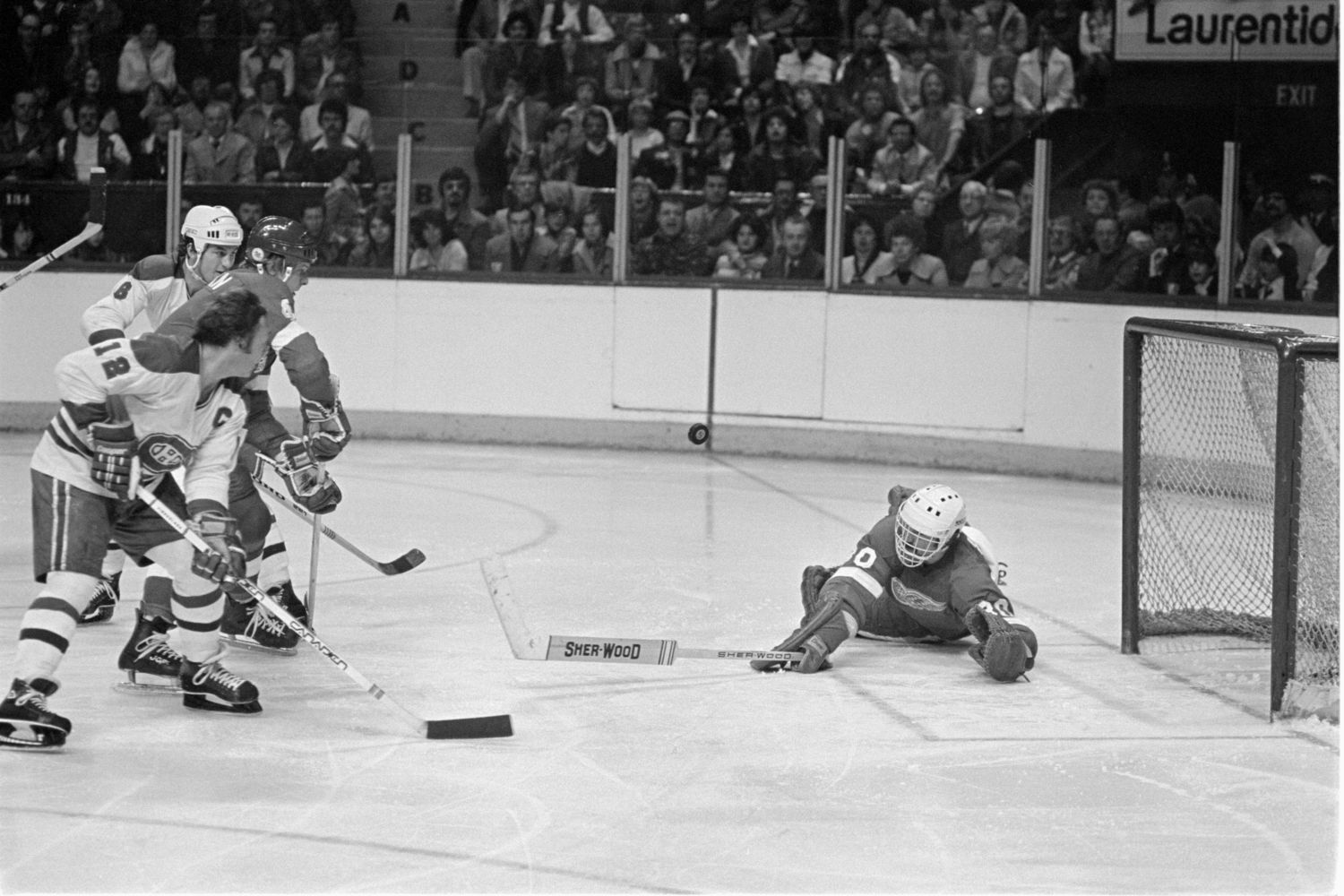
Fifty years ago this fall, the Montreal Canadiens began a three-season run that now reads like a story from another sport — or another universe. Across 1975–76, 1976–77, and 1977–78, they won 58, 60, and 59 games, swept two of their three Stanley Cup Finals, and lost only eight games in their best year. Nine of those players would end up in the Hockey Hall of Fame, plus their coach. Our new book The Heights Team argues it's the greatest sustained excellence hockey has ever produced. It's hard to find a counterargument.
But here's the part that sits with us: we built the modern game to make that impossible on purpose.
The salary cap, the draft, free agency, revenue sharing — every mechanism designed to create parity also quietly installed a ceiling on greatness. That was the point, and mostly it worked. The league is more competitive now, more fair, more genuinely uncertain week to week. But something was traded away, and I'm not sure we've ever admitted out loud what it was.
It was the permission to be extraordinary long enough that it stopped being a streak and became a culture. A dynasty isn't just talent; it's an idea a place can hold for years — a standard so high that people absorb it before anyone explains it. Those Canadiens didn't just win. They defined an identity a whole province and a whole country still argue about, five decades later.
The word matters because the idea leaks beyond the rink. We use "dynasty" for families, for companies, even for bands now. What we're really naming is an old longing: for something built to last, in a world that increasingly rewards the disposable.
We don't actually want the old economics back. That team won partly because it could outspend and out-stockpile everyone else, and there's nothing romantic about that. But I miss what they represented — the belief that a team, or a company, or a person, could keep getting better not for a season, but for a decade.
We got fairness, and we gave up the chance to watch greatness endure. Maybe that's a trade worth making. Maybe it isn't. But we should at least say out loud that it is a trade.
Is there anywhere in life — work, family, community — where we'd still rather protect a dynasty than accept parity?

8th House Publishing will publish Canada Strikes Back, a forthcoming novel by Richard Rathwell that imagines a near-future in which the United States has quietly absorbed its northern neighbour.
The novel opens in British Columbia's Fraser Valley with Nadia Okafor, a Tim Hortons supervisor and graduate student — an ordinary person living in a country that no longer exists. It is a story of occupation without war: not an invasion, but an absorption, accomplished through paperwork rather than bombs. And the resistance that rises to meet it comes not from capitals or armories, but from neighbours.
Rathwell grounds the story in a specific geography — the hills, the valley, and a community that refuses to become an abstraction on someone else's map.

MONTREAL — Three seasons. 282 games. A standard nobody has touched since. That is the argument at the heart of Jeff Olson's new book, The Heights Team: Hockey's Best Team Ever, from 8th House Publishing.
Olson makes a case that has long been whispered but rarely argued this carefully: the Montreal Canadiens of 1975–76 through 1977–78 are the greatest sustained run in hockey history. He even coins a name for them — the Heights Team — alongside the old familiars: Les Habs, Les Habitants, Bleu-Blanc-Rouge.
The numbers do a lot of the talking. The Canadiens posted 58 wins and 127 points in 1975–76, then 60 wins and 132 points the following season — a campaign with just eight losses that the book insists was never equaled in any NHL schedule — then 59 wins and 129 points in 1977–78. Three straight Stanley Cups across 282 games: 240 regular-season contests plus 42 in the playoffs. Scoped to the 80-game era, Olson argues that nobody has matched that combination of dominance and championships.
He does not simply lean on the standings. He takes readers through a roster that is a problem for anyone arguing against him: Guy Lafleur, who led the league in scoring all three seasons; Ken Dryden in net; Larry Robinson and Yvan Cournoyer; and the rest of a lineup that counts nine Hall of Famers — all wired together by Scotty Bowman.
Timed to the 50th anniversary of the 1976–77 season, The Heights Team is published in English and French editions, a fittingly bilingual tribute to a club at home in both.
The book is available in paperback and hardcover, 392 pages, with archival black-and-white photographs. Paperback ISBN 978-1-926716-86-2 ($29.99 USD); hardcover ISBN 978-1-926716-85-5 ($39.99 USD).
👉 Buy now: https://shop.8thhousepublishing.com/109-30-the-heights-team-hockey-s-greatest-team-ever.html

Imagine a city where survival is arithmetic. In near-future Montreal — after Quebec has separated and the economy has collapsed into recession — the Imperial Meridian Hotel on Sherbrooke Street has been reborn as the Ballroom, one of about a dozen gambling halls in the city. Every day, displaced people pay a ten-dollar entrance fee for a programmed tablet, then roam an enormous hall that stretches like a cathedral, trying to guess the exact number of players inside. When the officials hold one of their randomly timed counts, anyone whose guess matches the total wins the jackpot. A whole society's desperation, distilled to a single number.
At the center of this world are a father and a daughter. Bella is sixteen and left school after ninth grade to help her father. Walter is a Canadian Army veteran, scarred by Afghanistan; counting players in the Ballroom is the only work he could find after his discharge. "Here, Walter and Bella spent their days counting players who simultaneously counted them". Everyone in the hall is running the same estimate — counting the people who are counting them back. Human beings, reduced to units in a moving sum.
The game feels real, and not just as dystopian scenery, because its author actually knows the mathematics. Abraham Boyarsky is a novelist and a mathematician — for years Professor of Mathematics at Concordia University in Montreal, now retired from that professorship. When Walter explains his method, it reads like genuine estimation theory. He paces out a 400-square-foot zone — one-fiftieth of the 20,000-square-foot floor — counts the players inside it, multiplies by fifty, then refines. "It's about inference," Walter had once told Bella. "About knowing how people move when they're hungry. About subtracting the ones who ghost out. It's as much about what you don't see". The game, the book insists, is more than luck: it is pattern recognition, intuition, and much more.
But the novel's true subject is what refuses to be computed. Beneath the counting lies grief. Walter's war trauma follows him through the hall, and so does the memory of Elena — Bella's mother, an eighteen-year-old waitress when Walter met her in the Ballroom twenty years earlier, later lost to painkiller addiction and found lifeless in the kitchen by Bella. No estimate covers that. He lights a candle for his comrade Sam Dichter, killed by an IED in Afghanistan — a small ritual of remembering what the numbers erase. The love between Walter and Bella is the one thing in the book that cannot be reduced to a probability. "Don't let love become a cage," her mother said. "Not even your father's love". And when the Ballroom's owner tries to recruit Walter as an informant, Walter refuses — choosing instead to assemble a small team and try to beat the game on his own terms.
This is a dystopia that is really a question about value — what a person is worth when a system can only see them as a number to be guessed. The Ballroom is no decaying ruin; the floor is mopped three times a day, kept pristine because the place is still open for business. The horror is not in neglect but in how thoroughly order and counting have become the same thing. And still, a line of graffiti reminds the players that they will survive together — a promise the arithmetic cannot touch.
When have you been reduced to a number — and what in your life refused to be counted?

Last week we gathered in Minnesota to launch The Heights Team: Hockey's Best Team Ever by Jeff Olson, and the room felt like a locker room full of old friends.
Jeff was there in his #12 Yvan Cournoyer Canadiens jersey, living the history he wrote about. NHL great Tom Younghans (North Stars and Rangers) joined us, along with Coach Tom Saterdalen and Chris and Emily Paradise. Hockey author Anthony Walsh read from the book, and Audrey Nelson shared a passage that brought the 1975–78 Montreal dynasty right into the room.
A faceoff-style program, a book table, and a whole lot of people who simply love this game.
If you made it out, thank you — you're the reason these stories get told. And if you couldn't, the book is ready whenever you are.
So tell us: what's the greatest team you've ever watched?
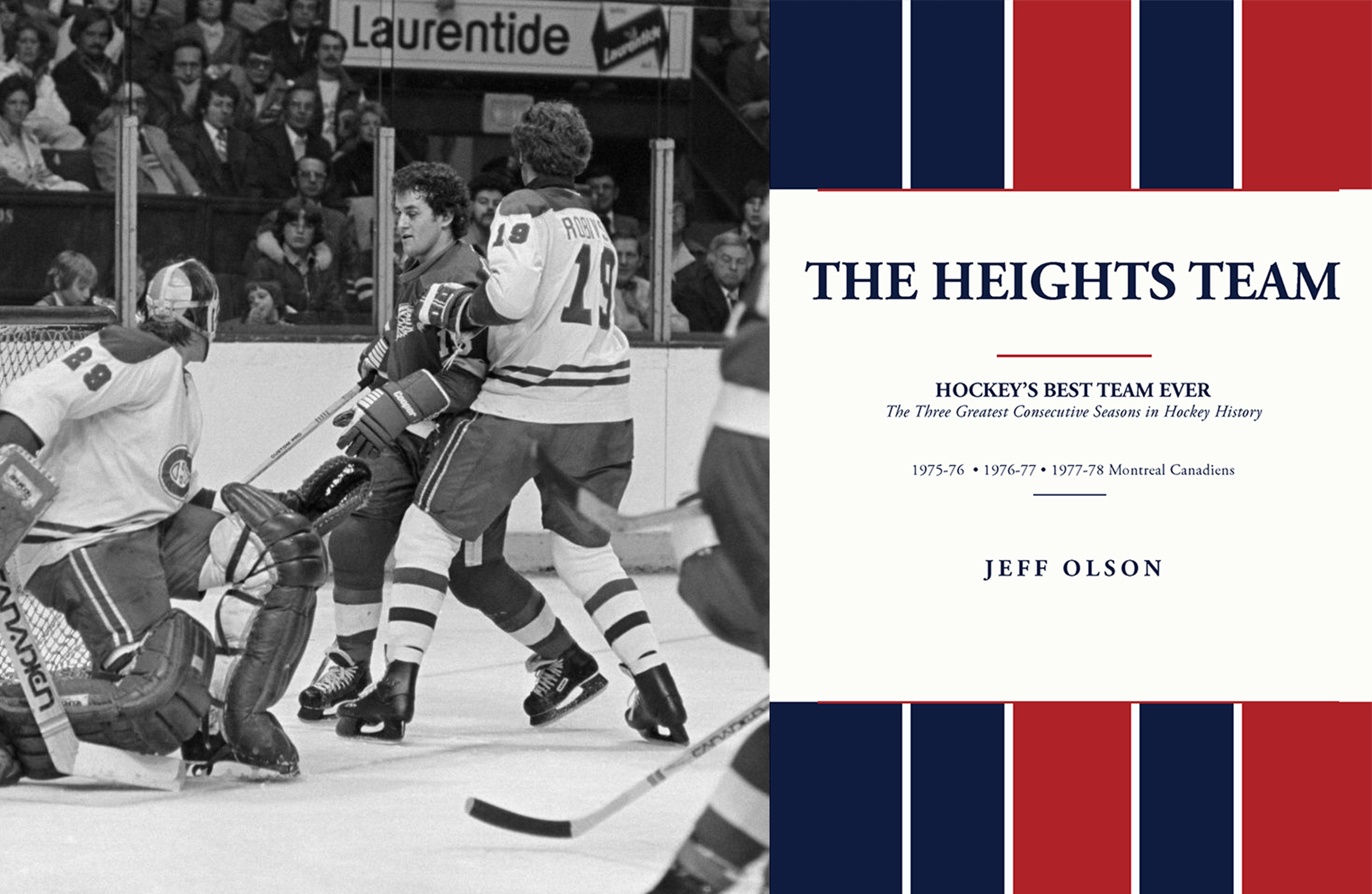
The wait is over, hockey fans. The Heights Team — Hockey's Best Team Ever, Jeff Olson's definitive account of the three greatest consecutive seasons in hockey history, is now available at all major retailers — in bookstores and online, in both English and French editions.
No more pre-orders. No more waiting for the puck to drop. The book is on shelves and in carts today.
The Heights Team tells the story of the 1975–76, 1976–77, and 1977–78 Montreal Canadiens — the dynasty that won three straight Stanley Cups and set a standard no club has matched since.
At its peak, the 1976–77 Canadiens posted a season for the ages: 60 wins against just 8 losses, a staggering 132 points, and the Stanley Cup.
And the timing couldn't be better: the 2026–27 season marks 50 years since that legendary 1976–77 campaign — a height no team has reached in half a century.
Jeff Olson brings that era roaring back to life: the players, the coach, the dynasty, and the three consecutive seasons that made history.
Title: The Heights Team — Hockey's Best Team Ever: The Three Greatest Consecutive Seasons in Hockey History, 1975-76 + 1976-77 + 1977-78 Montreal Canadiens
Author: Jeff Olson
Editions: English & French
Format: 6×9, black & white
Pages: 382
Paperback ISBN: 978-1-926716-86-2
Hardcover ISBN: 978-1-926716-85-5
Available now at all major retailers and direct from the publisher:
👉 shop.8thhousepublishing.com — The Heights Team
Pick up your copy today and relive the greatest team ever to take the ice. 🏒

Hockey fans, mark your calendars. Join author Jeff Olson and a lineup of Minnesota hockey legends for the official release program of The Heights Team — Hockey's Best Team Ever.
Date: Friday, October 16 (MEA weekend — schools closed)
Time: 11:15 AM — Social • 11:30 AM–Noon — Program
Location: Tom Reid's Hockey City Pub — North Stars Room
Address: 258 7th Street West, St. Paul, MN 55102 (southeast corner of West 7th St & Walnut St, downtown St. Paul)
Tom Younghans — NHL great, Minnesota North Stars & New York Rangers (1976–82), NCAA Champion (1976)
Coach Tom Saterdalen — one of Minnesota's top hockey coaches, 5 MN State H.S. Boys Championships and 15 trips to State leading Bloomington Jefferson
Jeff Olson — author, readings from the book
🏒Minnesota Wild pucks giveaway every 10 minutes
🏆Contest for #1–#5 "Hockey's Best Team Ever" — prize: a hardcover book
💰Special program pricing — 25% & 30% off
🥅Bring a hockey stick → $2 off all book purchases
🍽Appetizers for early arrivals (otherwise, buy your own)
The Heights Team chronicles the 1975–76, 1976–77, and 1977–78 Montreal Canadiens — three straight Stanley Cups, including the legendary 1976–77 season (60 wins, 8 losses, 132 points), a height no team has reached since. Available in English and French editions.
Come celebrate the greatest team ever. See you at the pub! 🍻
👉 Book details & ordering
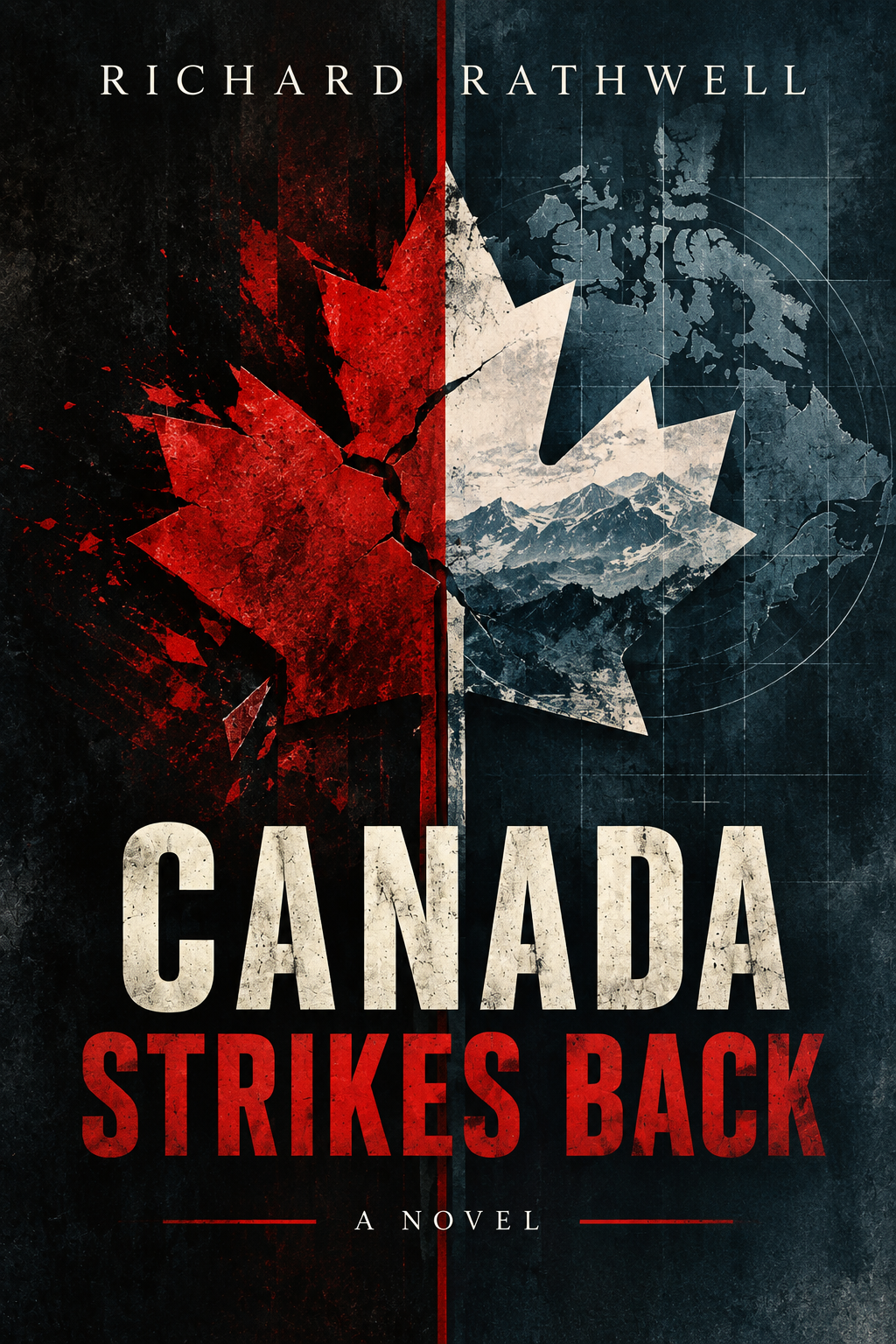
Set in a near-future Canada absorbed — incrementally, then abruptly — into a continental security empire dominated by the United States, the novel traces the formation and operation of TORCH, a grassroots resistance network in British Columbia's Fraser Valley, across the twenty-six months of what the occupying authority calls "the Continental Stabilization."
At its centre is Nadia Okafor, a Nigerian-Canadian Tim Hortons shift supervisor and graduate student, who asks the question that carries the book from first page to last: what do you want it to look like when it's over? Around her gathers an unforgettable ensemble — Danny Arsenault, the Acadian TransLink driver and Kandahar veteran who counts things; Marguerite Tremblay-Côté, the political economist whose fifteen years of research becomes the resistance's founding document; Silas Raven and Clara Watts of the Haida Nation; and Colonel Sarah Maines, the American commander assigned to run an operation her own paper predicted would fail.
Structured in five parts and drawing on the French Resistance, Myanmar's Civil Disobedience Movement, and the historical analysis of how empires fail, Canada Strikes Back is a novel about occupation, reconstruction, and the specific courage that is simply the refusal to stop. The Fraser River runs through it as both landscape and witness — "patient and indifferent and fully itself."
Further details, including the release date, will be announced shortly. Cover tentative.
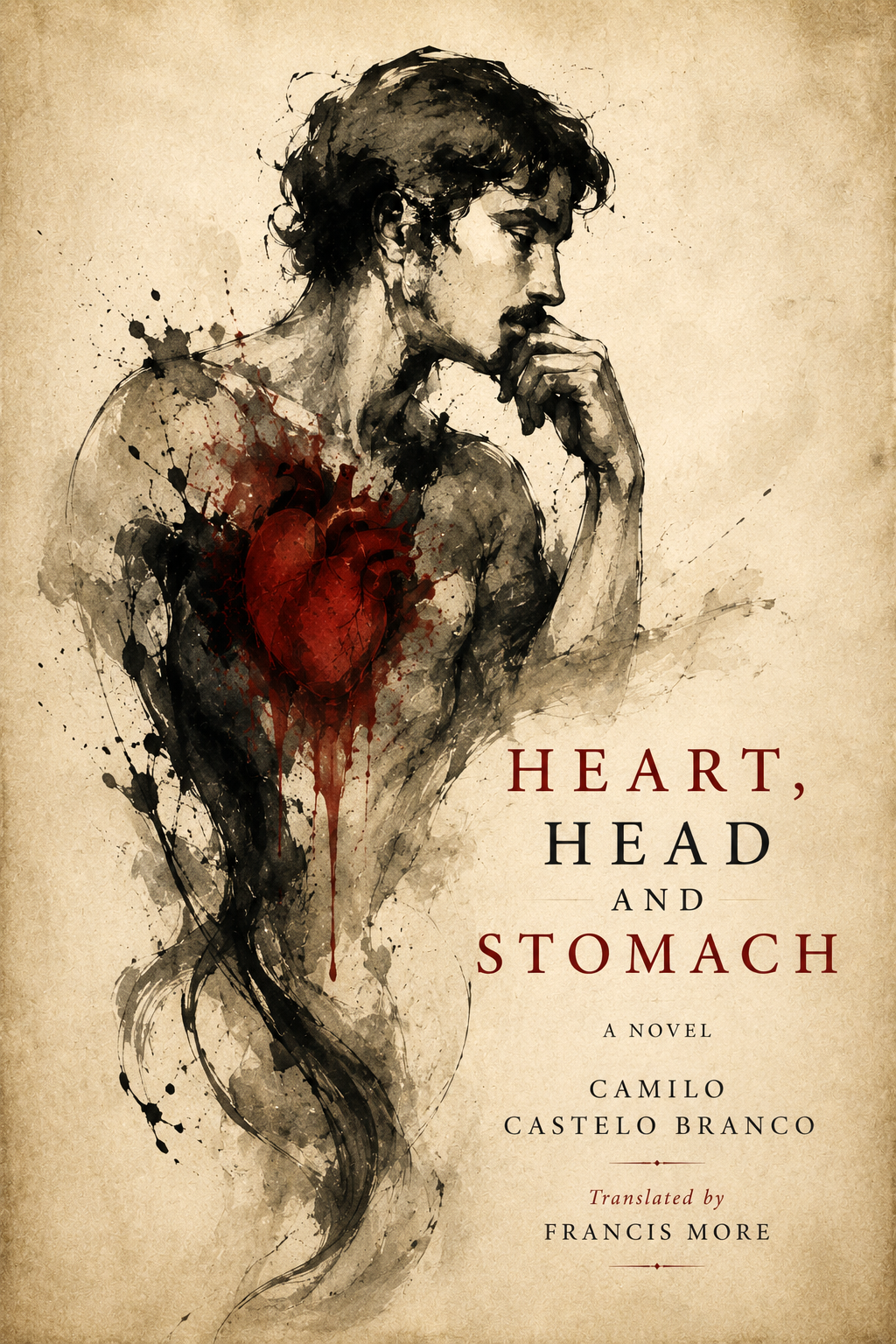
8th House Publishing is proud to announce the first-ever English translation of Heart, Head and Stomach (Coração, Cabeça e Estômago), the celebrated satirical novel by Camilo Castelo Branco (1825–1890), one of the greatest and most prolific writers in Portuguese literature.
First published in 1862, the novel traces the life of Silvestre da Silva through the three ruling forces named in its title. In the first, the heart holds sway: a young Silvestre chases love across a libertine Lisbon and meets only with disillusionment. In the second, the head takes command, and he turns a calculating eye toward the wealthy heiresses of Porto. In the third, the stomach rules, and he withdraws to Soutelo, his ancestral home, in search of a quieter, more comfortable life.
Presented as the posthumous papers of its hapless hero, Heart, Head and Stomach is a sharp and strikingly modern satire of romantic ideals, social ambition, and bourgeois hypocrisy — fiction that anticipates the realism still to come. This new translation by Francis More brings the book to English-language readers in a fresh, faithful rendering.
Publication details and a release date will follow.
Page 1 of 42
Montreal | New York
1-888-936-3668
info@8thHousePublishing.com