
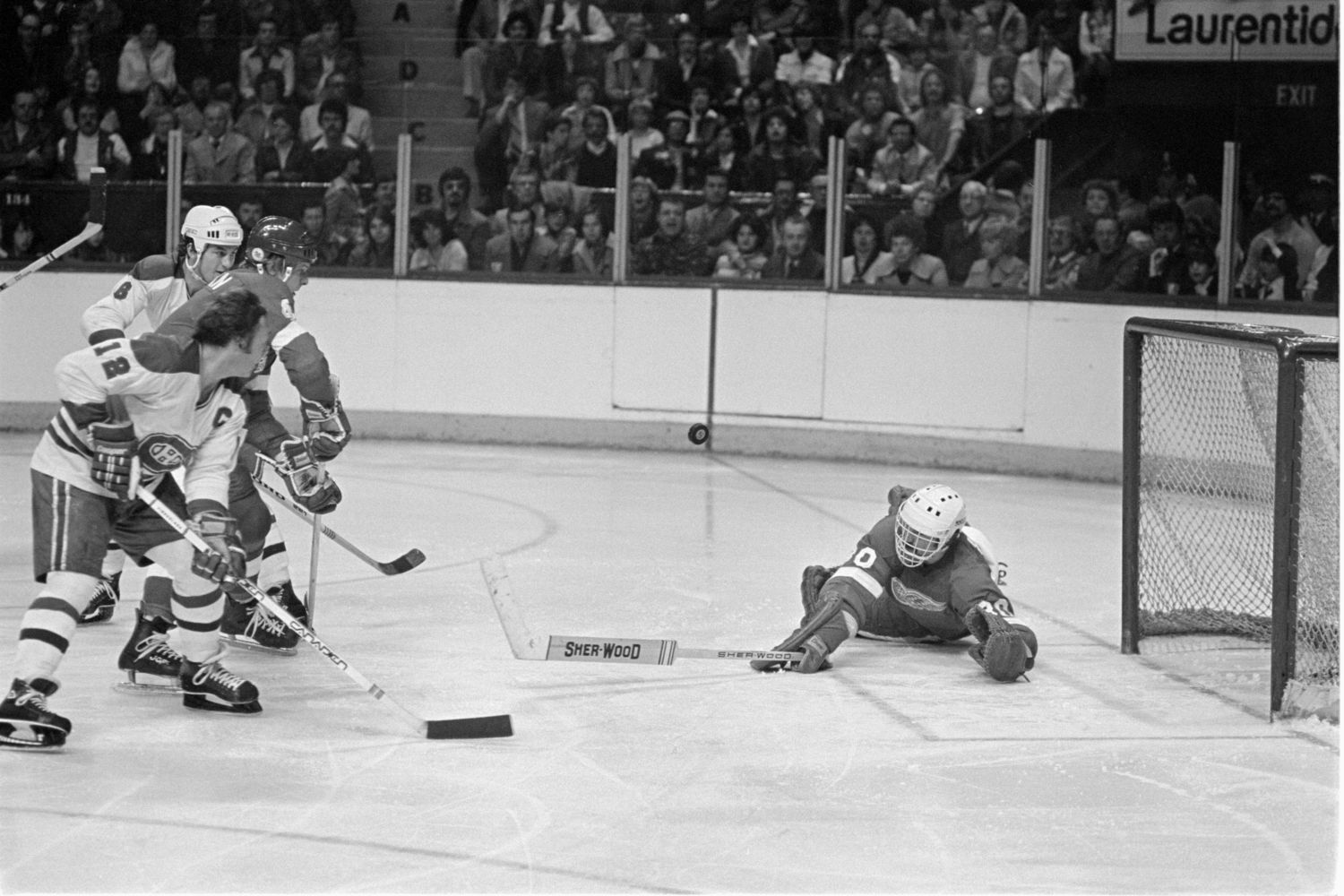
The Last Great Dynasty
Fifty years ago this fall, the Montreal Canadiens began a three-season run that now reads like a story from another sport — or another universe. Across 1975–76, 1976–77, and 1977–78, they won 58, 60, and 59 games, swept two of their three Stanley Cup Finals, and lost only eight games in their best year. Nine of those players would end up in the Hockey Hall of Fame, plus their coach. Our new book The Heights Team argues it's the greatest sustained excellence hockey has ever produced. It's hard to find a counterargument.
But here's the part that sits with us: we built the modern game to make that impossible on purpose.
The salary cap, the draft, free agency, revenue sharing — every mechanism designed to create parity also quietly installed a ceiling on greatness. That was the point, and mostly it worked. The league is more competitive now, more fair, more genuinely uncertain week to week. But something was traded away, and I'm not sure we've ever admitted out loud what it was.
It was the permission to be extraordinary long enough that it stopped being a streak and became a culture. A dynasty isn't just talent; it's an idea a place can hold for years — a standard so high that people absorb it before anyone explains it. Those Canadiens didn't just win. They defined an identity a whole province and a whole country still argue about, five decades later.
The word matters because the idea leaks beyond the rink. We use "dynasty" for families, for companies, even for bands now. What we're really naming is an old longing: for something built to last, in a world that increasingly rewards the disposable.
We don't actually want the old economics back. That team won partly because it could outspend and out-stockpile everyone else, and there's nothing romantic about that. But I miss what they represented — the belief that a team, or a company, or a person, could keep getting better not for a season, but for a decade.
We got fairness, and we gave up the chance to watch greatness endure. Maybe that's a trade worth making. Maybe it isn't. But we should at least say out loud that it is a trade.
Is there anywhere in life — work, family, community — where we'd still rather protect a dynasty than accept parity?